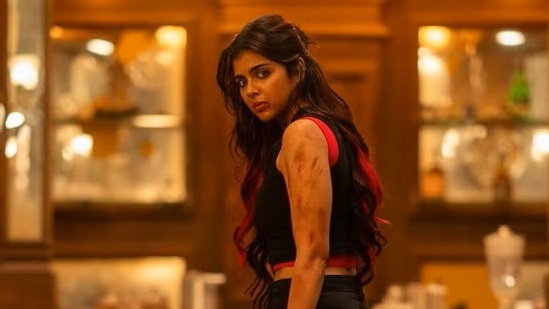
I walked out of the theatre at 8:30 PM after watching Lokah: Chapter 1 – Chandra, and I knew I couldn’t sleep without writing down what I felt. This wasn’t just another movie experience—it was the kind that leaves your heart racing, your mind buzzing, and your faith in cinema completely renewed.
Before I dive into what Lokah did to me, I need to remind myself (and you) that Malayalam cinema has always been a pioneer, a restless innovator in Indian film history:
- First Indian CinemaScope Film – Thacholi Ambu (1978)
- First Indian 70mm Film with Magnetic Stereo Sound – Padayottam (1982)
- First Indian 3D Film – My Dear Kuttichathan (1984)
- First Experiments with IMAX 3D in India – Navodaya Studios projects (late 1980s)
- First South Indian Film to Win National Best Film Award – Chemmeen (1965)
- Parallel Cinema with Global Recognition – Elippathayam (1981), Adoor Gopalakrishnan
- The Film That Travelled the World (Drishyam, 2013)
- Early Adoption of DTS Sound in India
- The Spark of the New-Gen, OTT-friendly Wave – Traffic (2011), Maheshinte Prathikaram (2016)
We were always the smaller industry compared to the giants—Tamil, Telugu, Bollywood. With limited budgets, limited audience, and limited marketing, we couldn’t compete with size. Instead, we competed with soul. We made films about the everyday man, his choices, his dilemmas. Heroes and villains blurred into people you knew, people who lived next door. Even when we stumbled into a decade of loud, commercial, often cringe-worthy cinema, it was salvaged only because actors like Mohanlal and Mammootty could make the impossible convincing.
That discipline—this deep audience conditioning to expect more—is what prepared us for Lokah.
For years, I wondered: why can’t we tell our own epics with the same grandeur that Hollywood or even Japan achieves with theirs? Why can’t we take our myths, our Aithihyamala, and create worlds that stun us into silence? Bollywood tried, and failed, because it forgot respect for the source. And I gave up hope—because I thought it would take bottomless pockets, and we simply didn’t have that luxury.
I was so bloody wrong.
Lokah: Chapter 1 – Chandra proved to me that all it takes is vision, conviction, intelligence, and the right people working with heart. This is the movie I had longed for but never believed I’d actually see done right. And now, I have.
Performances
- Kalyani as Chandra – A revelation. I had seen her in Bro Daddy—beautiful, yes, but never compelling. But here, she is Chandra. Her physique, her stillness, her rare smile, her deadpan stare—all of it carved her into the role. She is a true director’s actor, and after this, I will watch her differently.
- Naslen as Sunny – What sincerity! He was endearing, believable, never creepy, just a boy drawn into Chandra’s orbit. His friendships grounded him and made the film lighter, warmer.
- The friends (Venu and Nigil) – Chanthu (Venu) gave me Salim Kumar echoes, but the naturalness he and Arun (Nigil) brought was delightful. It never once felt like this was their first outing. They were alive on screen.
- The cameos – This is how cameos should be. Not for applause or cheap thrills, but to nudge the story forward, to tease a larger universe. Brilliantly done.
And here’s where Lokah shows why authenticity matters. When you cast actors who truly belong to the language, who speak Kannada, Tamil, or Malayalam the way the city breathes it, when you ground the story in the soil it grows from—you get cinema that feels alive. Without that, you get empty spectacles like Param Sundari, where neither accent nor setting rings true. Lokah, in contrast, thrives because it respects the culture it springs from.
The Technical Brilliance
The decision to open with a comic/manga-style depiction instead of drowning us in dodgy CGI? Genius. It drew me in instantly. The CGI that was used (Chandra’s leaps, her flight, the action) was stunning. Her physicality made it utterly convincing—no other actress could have carried those stunts the way she did. The villains were stereotypical, yes, almost laughably so, but that only made her victories more satisfying. I found myself cheering out loud when she won.
The Flaws
Chandra and Sunny? Zero chemistry. They tried, but it wasn’t there. As friends, yes. As anything more—no. But Sunny and his gang became her true anchors, always backing her, never judging her, never losing their innocence even as the world cracked open around them. That purity is rare, and I loved it.
The Afterglow
I came home, and I couldn’t put it aside. This was the kind of cinema I always knew we were capable of but feared we’d never get. It has opened a new door in Malayalam cinema—and if the team behind Lokah keeps this conviction alive, we, the audience, will follow them anywhere.
This isn’t just a film. It’s a promise.
 The Curated Corner
Leave a comment