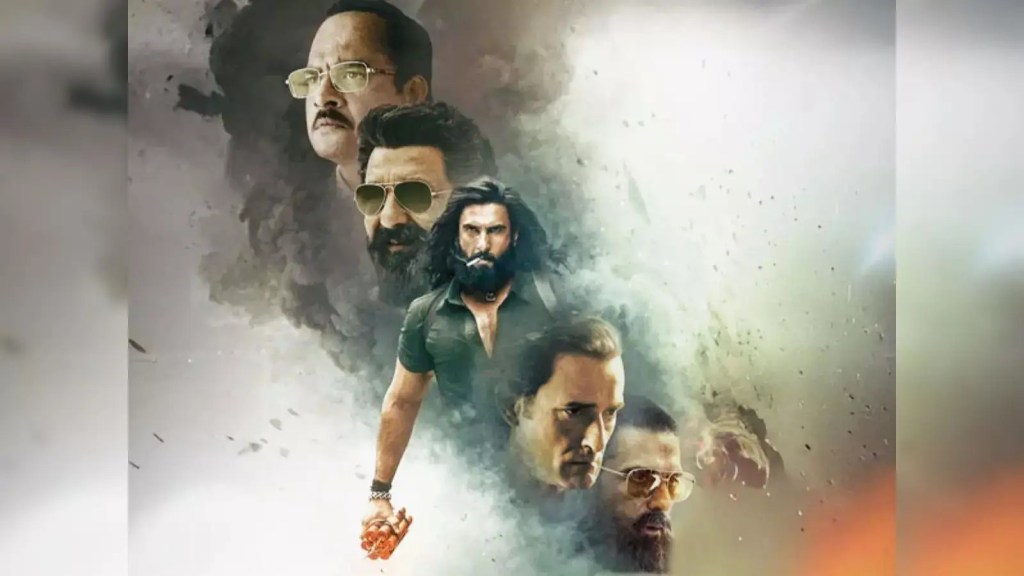
• Dhurandhar Review: When Espionage Loses Its Glamour and Reveals Its Cost

    Category: Film Review | Genre: Spy Thriller | Language: Hindi

    Watched Dhurandhar yesterday, and I needed to sit with it for a full day before I could even begin to articulate what I felt. This is not just another Bollywood spy movie—it is a deeply unsettling, emotionally exhausting, and ultimately cathartic experience.

    The premise of the film is now well known—a story of covert intelligence operations to identify and neutralise terrorists. Indian cinema (and Hollywood too, truth be told) has mostly portrayed spies as stylish figures in sharp suits, backed by thumping background scores, glamorous introductions, and impossible stunts.

    The first film that truly captured the terror and existential danger of being an undercover agent for me was The Departed (2006). Leonardo DiCaprio’s William “Billy” Costigan Jr. remains etched in my memory—especially that scene where he almost gets caught. The narrow escape, followed by his visceral reaction, translated the horror of living on the edge in a way no stylised spy film ever had. It stayed with me for years after I watched it. I never rewatched the film—not because I didn’t love it, but because I couldn’t.

    That’s precisely what has always been missing in most stylised spy movies: the fear of being caught. That fear is routinely overshadowed by glamorous escapades, conveniently stupid antagonists, and plot holes the size of moon craters—like ISI protecting Indian agents for the sake of India’s sovereignty.

    Dhurandhar Takes a Completely Different Path

    It takes the existing Bollywood spy universe and spins it on its axis.

    The film does not glamourise the spy world. Instead, it lays bare the time it takes to infiltrate terror camps, the dangers of deep cover, the horror of watching your actions hurt your own country while remaining a mute spectator because this is a long game, and the sheer moral rot within terror groups when political power enters the picture.

    Aditya Dhar’s research shows in every frame. His script is tight, his direction assured. There wasn’t a single scene I felt could be cut. In fact, I didn’t even realise I’d spent 3.5 hours in a theatre. What a cathartic experience.

    Performances That Elevate Dhurandhar

    Ranveer as Jaskirat/Hamza: Living on the Edge of Exposure

    Ranveer Singh as Jaskirat / Hamza is phenomenal. The patience with which he waits for months just to get a foot into the dreaded world of Rahman Baloch/Dakait, and then waits again to earn his place as the right-hand man, is portrayed with remarkable restraint. Every choice he makes chips away at him as a patriot, yet strengthens his resolve to see the mission through—Savdhaan and Sabr, drilled into him by his mentor. An effortless, controlled performance.

    (Also—on a lighter note—his hair. Almost a character in itself.)

    Madhavan as Ajay Sanyal: Authority Without Noise

    Madhavan as Ajay Sanyal is introduced with stunning authority. I genuinely couldn’t believe it was Madhavan on screen. He completely inhabits the body language and gravitas of a stalwart intelligence officer. Yes, some dialogues may sound propagandist to some, but it’s important to note that his criticism extends to the NDA government of 1999–2004 as well. He sees the coalition government of that time as lacking conviction, bowing to political pressures while over 200 lives hung in the balance.

    India was seen as weak internationally for a very long time. That is a reality no one can deny. We bowed to American and European pressure, never understanding that a bully stops only when punched back—at least once. Ajay Sanyal understood this, and that understanding gave birth to Operation Dhurandhar. His repeated reminder—Savdhaan aur Sabr—has proven, in hindsight, to be the country’s most effective long-term strategy.

    What the film also does, without sermonising, is acknowledge the terrible cost of decisions taken at the time. While that particular call did end up saving those lives in the moment, it also set in motion events that culminated in the 2001 Parliament attack, leading to the deaths of nine of our soldiers and countrymen. In barely thirty seconds, Dhar humanises the people guarding our Parliament—small, everyday moments before the shootout begins. When the woman officer is killed, the horror seeps quietly into our conscience. The job may be a choice, and the danger too—but death is never chosen.

    The Antagonists: Violence Without Romance

    There is not one wasted casting choice. Everyone on the opposing side is portrayed as their truly disgusting, horrific selves. Even when they lose someone, I felt nothing. They chose violence. They willingly picked up guns to kill their own people and innocent civilians across borders.

    Watching Baloch groups align with ISI for political power—handing over weapons to the very organisation that has systematically killed Balochis for resisting Pakistani domination—was deeply distressing. Rahman Baloch lying effortlessly to his own people, promising futures for children who would ultimately become victims of the same forces, was chilling. For them, it is always about money and power.

    Arjun Rampal as Major Iqbal Lyari: The Face of Psychological Terror

    Arjun Rampal revels in being hated—and it shows. As ISI militant leader Major Iqbal Lyari, he is terrifying. The slow drawl, the sickening smile, the venom in his words, and the torture scene are genuinely hard to sit through. The horror of being caught isn’t just dawning on Hamza—it hits the audience full force.

    Akshaye Khanna: A Masterclass in Controlled Villainy

    And then there is Akshaye Khanna—both the phenomenon and the revelation.

    When he debuted in the late ’90s, his charm was infectious. He looked every inch a future superstar. Yet despite his talent, versatility, and even a few blockbusters, superstardom eluded him. I believe it came down to two things: he never chased stardom, and his premature hair loss—along with his refusal to artificially mask it early on. Ironically, that turned out to be his greatest blessing.

    As Rahman Baloch, Akshaye delivers one of the most controlled, chilling portrayals of a truly vile human being. The way he walks, kills, commands fear, and even looks at people made my skin crawl. He is never shown as an idiot—not even in the final chapter, when he realises what Hamza is planning.

    Why Dhurandhar Matters

    I don’t know how to fully convey what I felt watching this film. I do know one thing—I am a coward. I would never send my child into something like this. And yet, countless parents and spouses in this country do exactly that. Dhurandhar made me feel the weight of that sacrifice throughout.

    These unsung heroes are our children—living daily with the threat of torture and death so that we can sleep peacefully. Calling out this reality is not hatred; it is acknowledgement. This film is not about Indian Muslims—it is about the brutal truth of espionage and the sacrifices of those who protect the nation.

    My heart is with them. I pray for nothing but their victory and safe return. And as a citizen, I will continue to call out hypocrisy—whether it comes from the left or the right.

    Bharat Mata Ki Jai.

    If you enjoy grounded, realistic spy thrillers that focus on psychological cost rather than glamour, Dhurandhar deserves to be watched—and discussed.

    Footnote: I did have a couple of issues. The casting of Sara Arjun—yes, the age gap is explained within the story — still felt awkward for me. The discomfort stems less from the narrative and more from the real-life contrast: he is in his 40s, while she is barely in her twenties, and that dissonance never fully went away. The bike chase sequence was another moment that stretched credibility too far; the entire police force in pursuit crossed into excess. Thankfully, these were minor blemishes in an otherwise tightly written and deeply affecting film.

  • Finding My Way Back After a Pause

    The past two months have been a whirlwind — personally and professionally. A few health-related concerns needed my attention, and at the same time, work brought its own set of responsibilities, including a branch shift and the usual rush that comes with it.

    In between all of this, I realised I needed to step back from writing and posting. What I thought would be a short break stretched longer, but it also gave me space to breathe, refocus, and gather fresh perspectives.

    I’m grateful for everyone who continued to check in, read older posts, and stay connected. Now that things are settling, I’m happy to return — hopefully with more consistent writing, new ideas, and renewed energy.

    Thank you for your patience and support.
    Here’s to a fresh start. ✨

  • Sathyan Anthikkad’s Hridyapoorvam: An Emotional Masterpiece

    Since the time I can remember, Malayalam movies have held a certain kind of magic for me. They’ve always portrayed characters that feel real — people you see around you and situations you could very well end up in yourself. The dialogues from these films have seeped into our daily lives, proof of how deeply they’ve connected with us.

    Yes, when we rewatch many of the 70s movies, the misogyny becomes hard to ignore, but by the 80s and 90s, things began to change—though not entirely. Still, these movies showcased organic relationships, both good and bad, and audiences never took offense; they saw it as the director’s vision and the actor’s craft.

    Films like Vellanakalude Naadu, Sandesham, Bharatham, Varavelpu, Thalayana Manthram, Ponmuttayidunna Tharavu, T. P. Balagopalan M.A., and the outrageously hilarious Nadodikkattu trilogy stand testament to this golden era.

    It’s no surprise then that I’ve been a lifelong admirer of Sathyan Anthikkad sir—a pioneer who has given us films with heart, humour, and slices of true life that hit you right in the gut. His comedy is never forced; it flows naturally, adding insight to his characters rather than existing merely for laughs.

    The yesteryear directors ensured that their films didn’t rot our brains. They encouraged us to expect better with every new release and never hesitated to call out what was problematic. They also listened to criticism and grew with their audience. That mutual evolution has kept Malayalam cinema relevant even amid the big-budget spectacles of other industries—productions our small yet mighty industry might not afford even twenty years from now.

    With all that reverence in mind, I went to the theatres (with my mom) to watch the latest gem from Anthikkad’s repertoire. His last outing, Njan Prakashan (2018), was already brilliant, and I was eager to see if Hridyapoorvam carried forward that legacy. It absolutely did.

    A Story That Flows Like a River

    The movie flowed like a river—calm on the surface, with emotions churning underneath. Every scene and every character served a purpose. The relationships felt real. The kitchen staff, in particular, were delightful; their chemistry with Sandeep (played by Mohanlal, our Lalettan) was believable and heartwarming. Even Sandeep’s discomfort with his family was depicted hilariously, without him even being on screen.

    Standout Performances

    Sangita as Devika (Haritha’s Mother)

    Sangita delivered a strong performance in limited screen time. As a concerned mother who doesn’t entirely understand her daughter—and perhaps resents her a little for “taking away” her husband’s affection—she struck a delicate balance between warmth and bitterness.

    Malavika Mohanan as Haritha

    Malavika was impressive, especially in her emotional moments. Each time she spoke of her father, her pain was palpable. Losing a parent is devastating enough, but losing one suddenly without closure leaves a wound that never quite heals—and she made us feel that ache.

    Siddique as O.K. Panicker

    No one plays the manipulative relative quite like Siddique. His portrayal of the greedy brother-in-law—oozing false affection and frustration when his schemes backfire—was a masterclass. The Pune POA scene had me silently yelling, “Don’t fall for it, Sandeep!” And when the tables turned, it was deeply satisfying. Siddique’s ability to blend menace and humour makes him one of the finest actors in our industry.

    Sangeeth Prathap as Jerry (The Nurse)

    Let me confess—I haven’t watched Premalu yet! But I noticed Sangeeth first in Thudarum, and even in a few short scenes, he was unforgettable. Here, as Jerry, he’s phenomenal. His interactions with Sandeep feel heartfelt and genuine.

    He’s not just a nurse; he’s a quiet companion who truly cares. Even when speaking to his unseen mother over the phone, his timing, pauses, and tone are so natural that you forget there’s no one on the other end. His character dreams of a better life but also fears losing the comfort of home—a sentiment many young Malayalis will relate to. His maturity, restraint, and respect for boundaries are refreshing. Honestly, everyone needs a “Jerry” in their life.

    And Then There’s Mohanlal as Sandeep Balakrishnan

    What can one say about Mohanlal that hasn’t already been said? He disappears into Sandeep so completely that the superstar vanishes from view. His easy camaraderie with the kitchen staff, his awkwardness with Haritha and her mother, his subtle physicality—especially the way he walks with back pain—all of it is so meticulously real.

    Sandeep’s relationship with Haritha is handled beautifully. There was so much potential for it to slip into sleaze or sentimentality, but Anthikkad and Lalettan never let that happen. His affection is misdirected but human. When he realizes the truth through the Colonel’s audio messages, the emotional impact hits hard. That single line — “No one in the world is as lucky as you to be loved so much by a parent”—broke me completely.

    That’s when Sandeep understands it wasn’t love he felt—it was the warmth and care he’d been missing for years. The realization is profound, and Lalettan conveys it with such understated brilliance that words fall short.

    The film ends on a hopeful note—emotional yet uplifting—with a gentle touch of humour and the promise of new beginnings.

    Final Thoughts

    Throughout Hridyapoorvam, I found myself smiling—sometimes laughing, sometimes tearing up. My mom loved it too (she’s taken notes on all of Malavika’s outfits, which she insists I start wearing!).

    For both of us, it was a reminder of why we fell in love with Malayalam cinema in the first place.

    Sathyan Anthikkad once again proves that you don’t need spectacle to create magic—all you need is heart. And Hridyapoorvam has it in abundance.

    Verdict: ❤️ Hridyapoorvam Is Pure Sathyan Anthikkad Magic

    • Direction: 5/5
    • Performances: 5/5
    • Emotional Depth: 5/5
    • Rewatch Value: 5/5

    A film that reminds you of home, heart, and humanity.

  • From My Dear Kuttichathan to Lokah: Chapter 1 – Chandra: How Malayalam Cinema Keeps Redefining Indian Film Innovation

    I walked out of the theatre at 8:30 PM after watching Lokah: Chapter 1 – Chandra, and I knew I couldn’t sleep without writing down what I felt. This wasn’t just another movie experience—it was the kind that leaves your heart racing, your mind buzzing, and your faith in cinema completely renewed.

    Before I dive into what Lokah did to me, I need to remind myself (and you) that Malayalam cinema has always been a pioneer, a restless innovator in Indian film history:

    1. First Indian CinemaScope Film – Thacholi Ambu (1978)
    2. First Indian 70mm Film with Magnetic Stereo Sound – Padayottam (1982)
    3. First Indian 3D Film – My Dear Kuttichathan (1984)
    4. First Experiments with IMAX 3D in India – Navodaya Studios projects (late 1980s)
    5. First South Indian Film to Win National Best Film Award – Chemmeen (1965)
    6. Parallel Cinema with Global Recognition – Elippathayam (1981), Adoor Gopalakrishnan
    7. The Film That Travelled the World (Drishyam, 2013)
    8. Early Adoption of DTS Sound in India
    9. The Spark of the New-Gen, OTT-friendly Wave – Traffic (2011), Maheshinte Prathikaram (2016)

    We were always the smaller industry compared to the giants—Tamil, Telugu, Bollywood. With limited budgets, limited audience, and limited marketing, we couldn’t compete with size. Instead, we competed with soul. We made films about the everyday man, his choices, his dilemmas. Heroes and villains blurred into people you knew, people who lived next door. Even when we stumbled into a decade of loud, commercial, often cringe-worthy cinema, it was salvaged only because actors like Mohanlal and Mammootty could make the impossible convincing.

    That discipline—this deep audience conditioning to expect more—is what prepared us for Lokah.

    For years, I wondered: why can’t we tell our own epics with the same grandeur that Hollywood or even Japan achieves with theirs? Why can’t we take our myths, our Aithihyamala, and create worlds that stun us into silence? Bollywood tried, and failed, because it forgot respect for the source. And I gave up hope—because I thought it would take bottomless pockets, and we simply didn’t have that luxury.

    I was so bloody wrong.

    Lokah: Chapter 1 – Chandra proved to me that all it takes is vision, conviction, intelligence, and the right people working with heart. This is the movie I had longed for but never believed I’d actually see done right. And now, I have.

    Performances

    • Kalyani as Chandra – A revelation. I had seen her in Bro Daddy—beautiful, yes, but never compelling. But here, she is Chandra. Her physique, her stillness, her rare smile, her deadpan stare—all of it carved her into the role. She is a true director’s actor, and after this, I will watch her differently.
    • Naslen as Sunny – What sincerity! He was endearing, believable, never creepy, just a boy drawn into Chandra’s orbit. His friendships grounded him and made the film lighter, warmer.
    • The friends (Venu and Nigil) – Chanthu (Venu) gave me Salim Kumar echoes, but the naturalness he and Arun (Nigil) brought was delightful. It never once felt like this was their first outing. They were alive on screen.
    • The cameos – This is how cameos should be. Not for applause or cheap thrills, but to nudge the story forward, to tease a larger universe. Brilliantly done.

    And here’s where Lokah shows why authenticity matters. When you cast actors who truly belong to the language, who speak Kannada, Tamil, or Malayalam the way the city breathes it, when you ground the story in the soil it grows from—you get cinema that feels alive. Without that, you get empty spectacles like Param Sundari, where neither accent nor setting rings true. Lokah, in contrast, thrives because it respects the culture it springs from.

    The Technical Brilliance

    The decision to open with a comic/manga-style depiction instead of drowning us in dodgy CGI? Genius. It drew me in instantly. The CGI that was used (Chandra’s leaps, her flight, the action) was stunning. Her physicality made it utterly convincing—no other actress could have carried those stunts the way she did. The villains were stereotypical, yes, almost laughably so, but that only made her victories more satisfying. I found myself cheering out loud when she won.

    The Flaws

    Chandra and Sunny? Zero chemistry. They tried, but it wasn’t there. As friends, yes. As anything more—no. But Sunny and his gang became her true anchors, always backing her, never judging her, never losing their innocence even as the world cracked open around them. That purity is rare, and I loved it.

    The Afterglow

    I came home, and I couldn’t put it aside. This was the kind of cinema I always knew we were capable of but feared we’d never get. It has opened a new door in Malayalam cinema—and if the team behind Lokah keeps this conviction alive, we, the audience, will follow them anywhere.

    This isn’t just a film. It’s a promise.

  • Juggling a demanding day job with my personal downtime often leaves me caught in a strange dilemma: should I watch something light and fun, or read something meaningful? The endless apps at our fingertips offer far more content than one lifetime can ever hold. Sometimes, I just want a no-brainer show — something that doesn’t ask too much of me, just an easy ride. But then, I feel like I’m wasting precious time on reels and shorts that leave me emptier than before.

    And then, there’s reading.

    I recently picked up Sophie’s World, and the contrast is almost dizzying. Instead of passive consumption, this book flips my thoughts on their axis. Why was Sophie chosen for those mysterious letters? Who is Hilde? And Albert Knox — what exactly is he hiding? As an adult, and the mother of a teenage son, I can empathize with Sophie’s mother. Her confusion, her suspicion, her struggle to understand her daughter’s sudden preoccupation with strange questions — it all feels too real.

    I’m not even halfway through, but the mystery has its hooks in me. I couldn’t resist pausing at Page 100 just to pen down these thoughts. The anticipation of what’s coming next is delicious — and that’s the beauty of reading.

    Sometimes, the best escape isn’t the easiest one. It’s the one that makes you stop, think, and feel curious again.

    For now, it’s back to Sophie’s journey… the pages are calling.

  • I’m a feast-or-famine kind of series watcher. Either I binge an entire show in a few days, or I take a “short break” that somehow stretches into months, and by then… interest lost.

    So, when When Life Gives You Tangerines dropped, I hesitated. I adored IU in Hotel Del Luna, but Park Bo-gum? My previous encounters with him (Record of Youth — bailed after three episodes, Love in the Moonlight — only survived because of Kim Yoo-jung) didn’t win me over. Still, for IU, I took the plunge. And this one? Another league entirely.

    Seamless Storytelling Across Time

    The series’ biggest triumph is its effortless jump between past and future. The transitions are smooth, the emotional continuity unbroken. Ae Sun is the heart of this story — played to perfection by Kim Tae-yeon (child), IU (young adult), and Moon So-ri (older years). Each brings the same soul to Ae Sun while making her age-specific struggles distinct.

    IU in particular blew me away — Ae Sun’s warmth and vulnerability contrasted starkly with Geom-Myeong’s sharp edges, proving her range. And Kim Hye-ran as Ae Sun’s mother, Gwang-Rye, was magnetic — their mother-daughter bond was equal parts heartbreaking and joyful.

    A Life Shaped by Her Mother’s Absence

    For Ae Sun, her mother Gwang-Rye wasn’t just a parent — she was her anchor, confidante, and role model. Every decision Ae Sun made as an adult seemed touched by the grief of losing her. Whether it was how fiercely she loved her own children, the way she clung to community bonds, or how she found strength in hardship — it all traced back to the ache of being without her mother.

    Even in joy, you could sense that loss in her. It was the lens through which she viewed the world. It made her cherish the people she loved all the more, but also made her more vulnerable to pain. IU and Kim Hye-ran made their scenes together electric — equal parts tenderness, frustration, and unspoken understanding. When Gwang-Rye dies, you feel Ae Sun’s world tilt, and that absence lingers like an invisible character in every frame thereafter.

    Love, Loyalty, and a Sea That Never Sleeps

    Gwan-Sik’s devotion is the kind of love story that feels rare on screen — pure, steady, and unwavering. His joy mirrored hers, his pain matched hers, and their bond as children laid the foundation for everything that followed.

    The haenyeo community — female divers of Jeju — was an eye-opener for me. Their camaraderie, resilience, and quiet defiance against patriarchy were captured beautifully. Even as breadwinners, these women faced deep-rooted inequality, yet they stood together, especially for Ae Sun after her mother’s death.

    Jeju itself is a character here — breathtaking and brutal. The sea brings both life and loss. The death of their child broke me, but Gwan-Sik’s grief in the scene where he registers the death? I had to pause the episode to catch my breath.

    A Family Forged in Values, Not Blood

    Through Ae Sun and Gwan-Sik’s choices, the show champions kindness, resilience, and the idea that a family is built, not inherited. They broke the cycle of selfishness they’d seen in their own families, raising children who — despite mistakes and frustrations — never lost their moral compass.

    Geom-Myeong’s narration offers a layered view: she knows she sometimes hurt her parents, resents their sacrifices, but also grows to understand their unwavering love. Eun-Myeong’s arc — shaped by his mother’s lack of faith in him — was equally compelling, and the parents’ decision to sell the boat and take him out of jail underlined their priorities.

    Side Stories and Political Backdrop

    The political climate — dance bans, arrests for clubbing, the Korean financial crisis — was fascinating to me as someone unfamiliar with Korea’s history.

    Geom-Myeong’s romances, however, were the weakest link. Her first love was passionate, her second (with my beloved Kim Seon-ho) was underdeveloped — their connection felt abrupt. Eun-Myeong’s romance also seemed forced, existing mainly to stretch certain plot threads.

    The Highs and the Slip in the End

    The series shines brightest in Ae Sun and Gwan-Sik’s journey from childhood to old age — intimate, believable, and beautifully acted. But after Gwan-Sik falls ill, the narrative starts to lose focus. The last two or three episodes felt like they were searching for an ending, falling into the trap many K-dramas do.

    Final Verdict

    When Life Gives You Tangerines is not flawless, but its emotional core — Ae Sun, Gwan-Sik, and the world around them — is powerful enough to make you forgive its stumbles. Watching it left me with heart-wrenched warmth — that bittersweet ache of being broken by their losses yet comforted by the steadfast love and kindness that carried them through.

    That said, the ending felt a little too neat for my taste, tying up nearly every thread in a bow.

    The one exception — Moon So-ri, as the older Ae Sun, still calling out for her mother in the final scene — cut straight through me. Damn, that lady is talented; in that moment, I could feel my chest tighten as if it were my own grief resurfacing. It’s a reminder that even in hardship, kindness and steadfast love can make life, if not perfect, deeply worth living.

  • The National Awards are meant to celebrate the best of Indian cinema — the craft, the courage, the stories that stick. But this year? It felt more like a highlight reel of political appeasement and PR deals. Honestly, you couldn’t make this up if you tried.

    I wasn’t even planning to post about this award fiasco. I really wasn’t. But then came the relentless, over-the-top hype for Aadujeevitham — and I just couldn’t take it anymore. Sometimes silence feels like complicity, and this year’s winners? Deserved a loud, unfiltered reaction.

    🎥 The Kerala Story: Now with Best Director?! Seriously?

    What. The. Hell. 🤣

    This was one of the most tone-deaf portrayals of a Malayali girl I’ve seen in a long time. The acting was flat, the accent was laughable, and the entire representation of Kerala was borderline caricature. That painfully fake “South Indian” accent — Bollywood still doesn’t get it. And yet this is what wins Best Director?

    For a subject that deserved nuance, depth, and cultural authenticity, we got cringe. This was a missed opportunity on every level. They could’ve easily cast a true Malayali actress who actually understands the lived experience — or at the very least, worked with a diction coach. Instead, they delivered a performance that felt more like an SNL spoof than a serious film.

    Awarding it for direction just rubs salt into the wound. If this was “vision,” I’d rather be blind.

    🏆 The Supporting Actor Drama: Sour Grapes Are Not Awards

    The ongoing outrage about the Supporting Actor category is baffling. This category exists to honour talent beyond the lead. Some of the most iconic performances in Indian cinema have come from supporting roles — the friend, the sibling, the mother, the antagonist.

    Veteran actors complaining about the existence of the category entirely? That’s not wisdom. That’s ego talking. And it sounds awfully like sour grapes when the spotlight doesn’t shine on you.

    👑 SRK and the Jawan Award: Better Late Than Never?

    Yes, I love Shah Rukh Khan. And no, Jawan was not a performance that deserved the National Award. But here’s the thing — he should’ve received it for Swades years ago. Or even Chak De India. The man carried an entire generation of Indian cinema on his shoulders. So maybe, just maybe, the jury was making up for lost time.

    Still, if this is a lifetime achievement disguised as a performance award, let’s just be honest about it.

    🐫 Aadujeevitham: All PR, No Punch

    Aadujeevitham got hyped to the moon and back — long shoot schedules, desert survival stories, drastic weight loss, emotional drama. But the final product? Meh. There wasn’t a single person I know who came out of the theatre raving about it. Just because something is physically difficult to shoot doesn’t make it emotionally powerful.

    And Prithviraj? He’s talented, yes. But when you try to peddle your personal politics and then expect universal applause, that’s not courage — that’s arrogance. He got completely snubbed this award season, and frankly, I’m okay with that.

    😂 Bhagavanth Kesari: Who Were You Trying to Please?

    And to add to the absurdity — Bhagvanth Kesari wins an award. For what, exactly? Unintentional comedy? If the jury really wanted to confuse us, congratulations. Mission accomplished. At this point, I’m bracing myself for Housefull 5 to win for “Best Representation of Modern Indian Masculinity” next year. 😂

    📝 Final Thoughts

    This year’s National Awards didn’t feel like a celebration of Indian cinema. They felt like a boardroom deal — where awards were handed out like party favours. But here’s the thing: audiences today aren’t blind. We know when we’re being manipulated. We can smell the politics behind the packaging.

    You can try to dress it up as merit, but mediocrity in a tuxedo is still mediocrity.

    Let’s hope next year brings back integrity.

    And please — for the love of authenticity — hire a diction coach.

  • My father, James Witherspoon, is a bigamist. — the opening line punches you, but the emotional bruises unfold slowly, and painfully.

    I just finished Silver Sparrow, and I feel gutted. This book was heavy—not just in subject but in truth. Tayari Jones doesn’t give you easy characters. She gives you people who make impossible choices, and then makes you sit with the consequences.

    I couldn’t not judge Gwen, James, and Raleigh. The adults in this story were, quite frankly, garbage. Yes, there’s generational trauma, but they had choices. And they chose wrong. Repeatedly. The children—Dana and Chaurisse—were left to live out the consequences of those selfish decisions.

    Dana broke me. She’s a “silver” child, illegitimate, hidden, half-claimed. She never got to call her father “dad” in public. Her existence was a secret arrangement. And still, she longed for love, validation, acknowledgment. Gwen—her mother—may have loved her, but she also trapped her. She could have had any life, but she chose to build one around a married man. That decision cost Dana everything. When Gwen made Dana choose between James and Raleigh, I was furious. That was never Dana’s burden to carry.

    James, the father, the liar, the coward—he walks away from all of it relatively unscathed. Sure, Chaurisse doesn’t trust him anymore, but he still has his name, his life, his family. He created pain like ripples in a pond and never looked back. And the worst part? The world lets men like him get away with it.

    Chaurisse was never my “team.” She had the family, the name, the photo albums. Even after learning the truth, she still got to say “my dad” out loud. Dana never did. That contrast hurt.

    I finished the book with no closure. And maybe that’s the point. The “silver” children of this world rarely get neat endings. Their lives are written in margins. Their pain is kept quiet. And their stories are erased—until someone like Tayari Jones chooses to tell them.

    No sympathy for Gwen. No redemption for James. But I’m holding back tears for Dana. Because all she wanted was to be seen—and in the end, even that was too much to ask.

    In the end, I put the book down with a heavy heart.

    For all the children like Dana—hidden, silenced, made to feel like shadows in someone else’s story—I wish the world offered more justice, more love, more truth.

    The pain of being a silver sparrow isn’t just in being unacknowledged; it’s in knowing you existed, you loved, you hoped—yet you were never meant to be seen.

    To all the Silver Sparrows out there:

  • “Do we have to go through life alone? Isn’t life more enjoyable when you have people you love and can rely on unconditionally?”

    Tastefully Yours had been on my watchlist for a while. The trailer on Netflix was intriguing, and I’ve always had a soft spot for K-dramas that revolve around food—because when it comes to food, Korean dramas know how to make your mouth water and your heart ache. The last show that truly stayed with me in this genre was Chocolat, which explored healing—both emotional and physical—through the act of cooking and sharing meals. That one was heavy. I expected Tastefully Yours to be lighter, and it didn’t disappoint on that front.

    The Premise

    At the heart of the story is a classic setup: a chaebol male lead (ML), Han Beom-woo, with deep emotional scars, and a fiercely principled yet wounded female lead (FL), Mo Yeon-joo, who manages to retain her innocence despite life’s curveballs.

    Beom-woo isn’t instantly likeable, but as the story unfolds, it becomes clear why he is the way he is. His mother, Han Yeo-ul—referred to throughout the series as Chairman, not Chairwoman, which itself speaks volumes—is the ruthless head of Hansang Group. She pits her two sons against each other in a cruel competition for control of the company. Their battleground? A Michelin-like goal: the elusive 3-star rating from the prestigious Diamant Guide. Beom-woo heads Motto, his brother La Lecel, and they’ll do anything to win. Eyerolls are valid here.

    The Characters & Conflict

    One of the standout supporting character is Chef Jang Young-hye, the ultimate opportunist. She never bats an eyelid when her boss unabashedly steals recipes from smaller restaurants, rebrands them at Motto, and drives the originals to bankruptcy—all with the Chairwoman’s approval. It’s infuriating to watch, until karma comes knocking, with a little nudge from an unexpected place.

    When Motto’s new signature dish turns out to be suspiciously similar to one from an obscure restaurant in Jeonju, Beom-woo visits to investigate. Enter Mo Yeon-joo, the eccentric chef running a one-table restaurant with no signage. She’s fiery, principled, and—most importantly—not for sale. Their first meeting is adorable, and a wake-up call for Beom-woo, who’s used to getting his way. She clears the misunderstanding with skill and flair—but it’s her cabbage kimchi that really captures his soul.

    What starts as an undercover mission to steal recipes becomes something far more heartfelt. Beom-woo offers to help Yeon-joo make her restaurant profitable, hiding his real motive. She agrees, unaware of his deception. But somewhere along the way, Beom-woo begins to fall—for her, for Jeonju, and for the kind of life he never thought possible.

    What Worked

    This drama is a great one-time watch, thanks mostly to Kang Ha-neul’s portrayal of Beom-woo. He brings depth, warmth, and a surprising amount of humour to the role. When he laughed, I laughed. When he cried, my heart broke.

    The supporting cast is solid. Kim Shin-rok as Jin Myeong-sook and Yoo Su-bin as Shin Chun-seung are a treat—especially Myeong-sook’s obsession with a fictional K-drama Lovely Jogger, a hilarious nod to Lovely Runner, which I personally adored.

    Bae Na-ra as elder brother Han Seon-woo also shines. His inner conflict, his silent suffering under their mother’s tyranny, and his subtle evolution were handled with restraint and skill. The relationship between the two brothers became the emotional core of the series for me. It felt like a shared coming-of-age journey more than just a rivalry.

    The ending, with its quiet mending of their fractured bond, left me smiling. As for the Chairwoman—she remained unrepentant to the very end, which somehow made me laugh out loud. Some people never change, and maybe that’s okay too.

    What Didn’t Work

    Unfortunately, Go Min-si as Mo Yeon-joo was a major letdown. I expected more from someone who delivered such a strong performance in Youth of May. She was charming in the light, playful scenes with Beom-woo and her staff, but in moments that required emotional heft—especially the scenes at the temple or with the Venerable—she felt wooden and disconnected. It’s baffling, honestly, given her track record.

    The romance also took a backseat, which was disappointing given the setup. Had the chemistry been stronger, perhaps it would’ve hit harder—but with Min-si coasting through the role, it never reached its potential.

    Yoo Yeon-seok’s cameo as Jeon Min was a nice surprise, even if it felt slightly dragged out. Still, I’m not complaining—he lights up the screen (and my heart) every time he is on screen and brings conviction to every frame, and he plays layered, morally grey characters like no one else.

    Final Verdict

    Kang Ha-neul carries the show on his capable shoulders, supported by a charming ensemble cast—minus a surprisingly lacklustre performance from Go Min-si. The food, the setting, the emotional undercurrent between siblings—all make it a comforting 10-episode watch. Just don’t expect fireworks from the romance.

    PS: Major shout-out to the title theme – absolutely creative and charming!

  • Everyone has their own way to unwind, right? For me, it’s curling up and bingeing on K-dramas. After the daily whirlwind of work, chores, and family life, I crave stories—heartwarming, dramatic, or even totally unrealistic—that let me escape reality for a while.

    Now, I don’t just watch anything—I scout for good content (picky viewer alert). After circling this one for weeks, a trusted friend finally gave me the push I needed.

    So here I am…watching Tastefully Yours, a Korean drama with just 10 episodes—short, sweet, and (hopefully) satisfying. One of the best things about K-dramas? No endless seasons or unresolved cliffhangers (ahem looking at you, American TV).

    Full review coming next week. Stay tuned!